Contents of the 1926 volume of Ladies’ Home Journal
by an Anonymous Biology Major
The 1920s was a time of many innovations and discoveries in the medical world, such as the invention of insulin and penicillin, which shows in the type of products that were advertised in the journals. The vast majority of the advertisements I looked at in my volume either related to cleanliness or sanitation in some way or fashion, with a general trend in many of the products advertised having a heavy focus on health consciousness and safety relating to products targeted toward infants and young children. Many of these advertisements focused on “being the newest and greatest product” or having recommendations from medical professionals as a method of drawing in consumers and convincing them that the product they’re selling is the safest, healthiest, and smartest option to purchase. This trend of health consciousness is also reflected in social media trends today relating to mothers on sites like TikTok reviewing and promoting what they feel are the best products for children. However, some of the qualities of the products recommended back then differ greatly from those advertised today.
Baby Bottles
An example of this is a “futuristic” baby’s bottle called PYREX. It had a unique geometric shape and was designed to hold liquids that had extreme temperatures, like hot soup or cold water. Its pointy sides and square base were also included to ensure that there were no sharp, hard-to-wash angles inside the bottle that allowed for bacteria accumulation. The advertisement also included a note at the bottom that the bottle’s design was approved by “baby specialists,” likely as a way to give its unique shape a form of legitimacy compared to its other competitors.
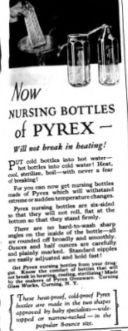
There’s a large and growing community of moms on social media sites like TikTok who not only share their experiences as a parent but also review and test out products related to childcare, like baby bottles. With an overall increase in companies taking to social media to advertise their products, this trend of mothers acting as influencers and rating products online for companies has also become widespread. However, many of the baby bottles that mothers choose to review online today have stark differences from products like PYREX.

For example, popular baby bottles reviewed in many of the TikTok videos I’d watched for research, like Philips Avent and Dr. Browns have access to anti-colic technology, which includes valves in the nipple of the bottle that vent air away from the baby’s tummy, helping reduce gas and fuzziness. Additionally, unlike PYREX, both of these bottles are made of plastic instead of glass and have a cylinder-like shape instead of clear dimensions. They each prevent bacteria accumulation, though, by being much easier to assemble than PYREX bottles ever were, and are shown to be easy to maintain and keep clean even without an innovative design choice.
Baby Garments
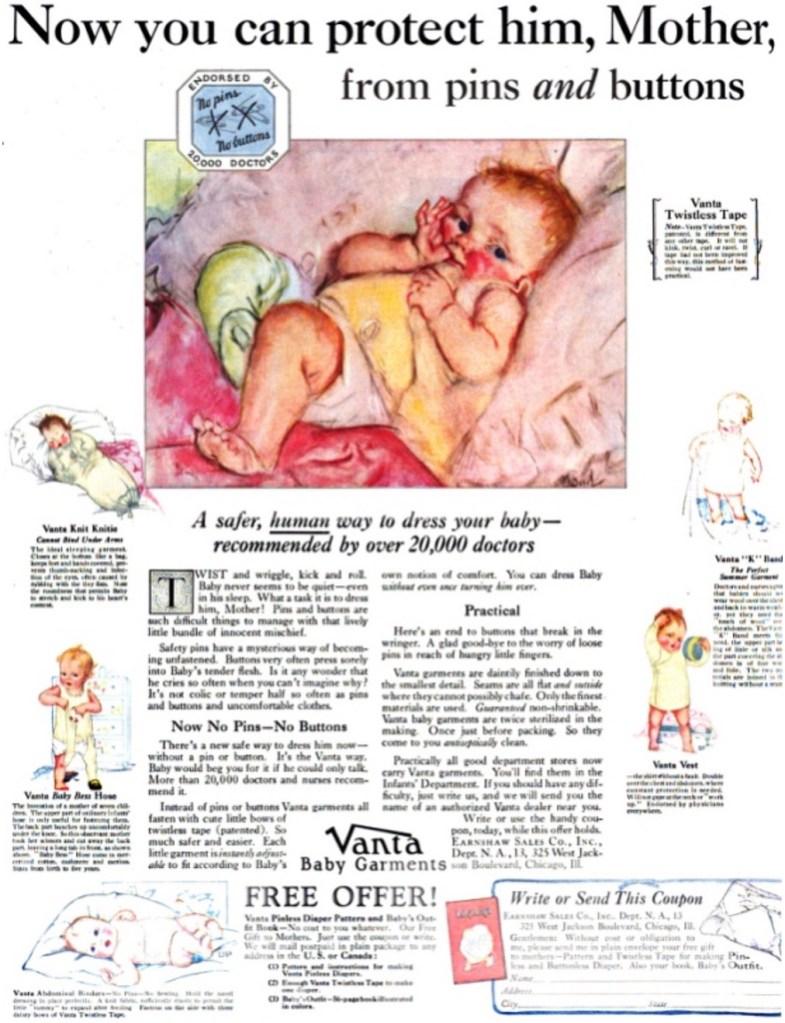
Another example of a product that utilized health-conscious promotion was Vanta’s Baby Garments, which was a company that advertised its clothes as being a safer, more sanitary option for baby clothing compared to its competitors. The advertisement I read stated that the clothes were recommended by 20,000 doctors, with each garment being sterilized when packaged to keep it fresh on arrival. Additionally, the garments had no sharp pins or buttons for babies to harm themselves with, which the company uses to further present itself as a secure clothing option for mothers who frequent the magazine.
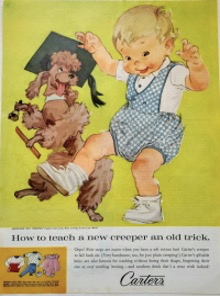
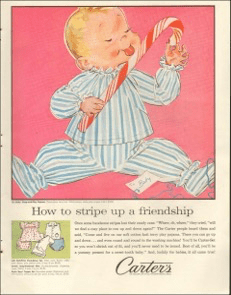
A diaper company called Carter’s did something similar for their advertisement, including in their ad space that their product was specifically recommended by doctors. It was made from high-quality wool, had bands with reinforced sides, and had plenty of space to give as much freedom of movement to the baby’s legs as possible.