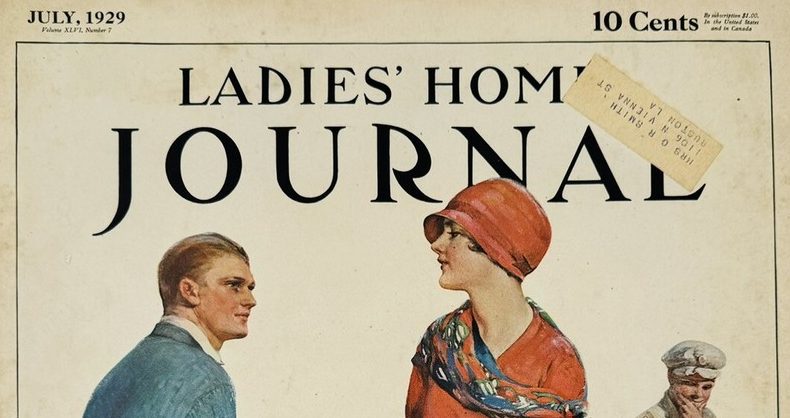
Contents of the 1929 volume of Ladies’ Home Journal
by Anthoanet Travenzano, Biochemistry Major, Fairleigh Dickinson University, class of 2028
For Volume 46 of the Ladies’ Home Journal, a year-long review was conducted, analyzing issues from January to December 1929, in order to compare the medical, health, and wellness information of that time with one or more current social media trends.
The messaging and advertisements in the journal were primarily directed at women—especially mothers and housewives—focusing on how to take care of the home, their children’s health and wellness, and their own beauty. Many of the products advertised promoted unrealistic beauty standards for women who had multiple children and spent most of their time doing household tasks like washing dishes and cleaning. These advertisements often demanded that women maintain a clear, smooth, and flawless appearance despite the physical demands of domestic labor.
The most notable trends in the 1929 journal were the emphasis on dental health, gut health, and feminine care, as well as the health of growing children.
Gut Health
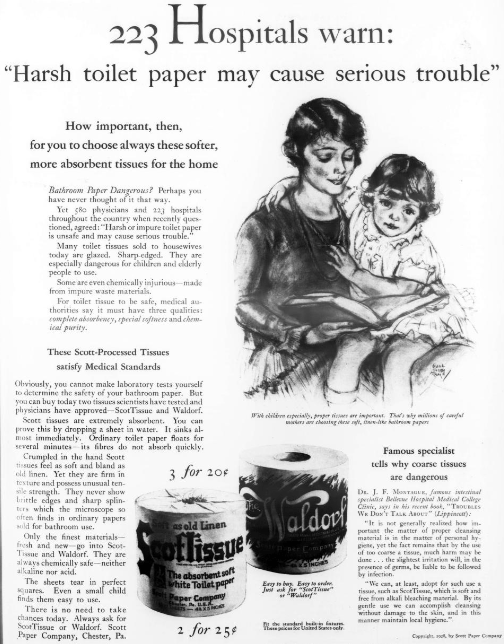
Regarding gut health, there were numerous advertisements about the quality of toilet paper and how using a rough material could cause painful diseases. Various brands promoted their toilet paper backed by scientific evidence, claiming that their product contributed to the health and well-being of consumers. Similarly, today’s advertisements still highlight the softness of toilet paper to prevent irritation, but they rarely explain why softness matters. In contrast, the 1929 journal explicitly stated that rough toilet paper could irritate the skin and expose sensitive tissue to bacteria, potentially leading to infections and diseases transmitted through waste contact.
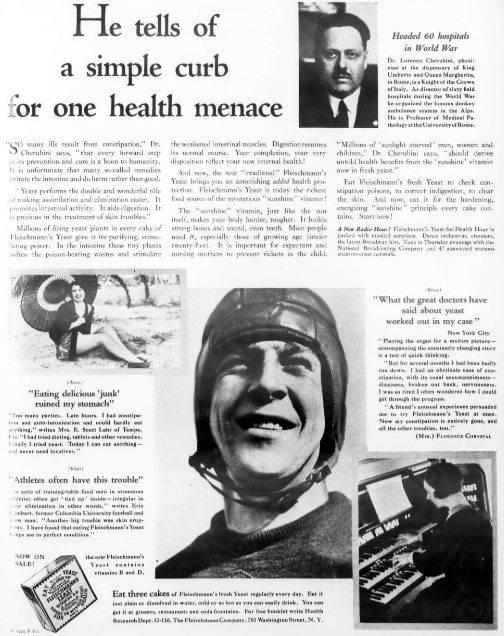
Another trend was the promotion of yeast for constipation. These yeasts contain active live cultures said to fight harmful bacteria and detoxify the body, improving digestion, skin health, and overall vitality when used regularly. Remarkably, some advertisements linked gut health to the nervous system and mental well-being. This idea is still a popular trend today, frequently discussed on social media by doctors who explain how gut health impacts mental health and overall bodily functions.
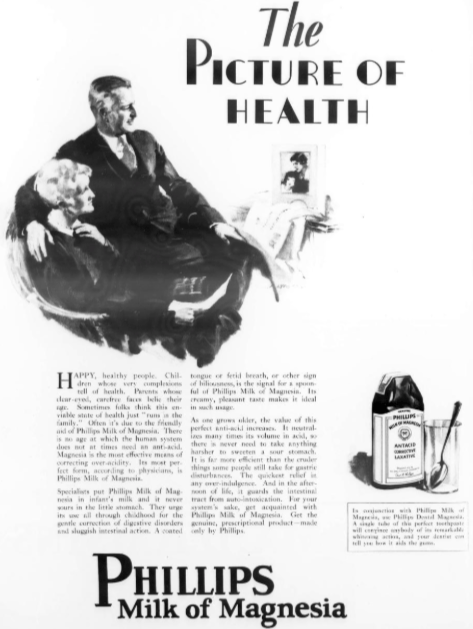
Milk of Magnesia was another popular product used to relieve sour stomach, correct acidity, aid digestion, and support general digestive health. This is very similar to today’s social media trends that promote magnesium for faster metabolism and better digestion.
Many of the edible health products in the 1929 journal were endorsed by experienced doctors and supported by medical information and scientific research, unlike other advertisements that simply promoted products without professional backing.
Dental Health
As for dental health, many products focused on whitening yellow teeth, promoting an idealized appearance while ignoring factors like genetics. Today, similar trends persist, with many influencers and brands offering whitening solutions. However, more dentists on social media now emphasize proper hygiene over cosmetic perfection.
Brands like Kolynos, Forhan’s, and Colgate were frequently advertised in 1929, and Colgate still promotes its dental products today with scientific support across various media platforms.
Listerine was also advertised as an antiseptic mouthwash that could kill millions of bacteria in the mouth and on other surfaces.
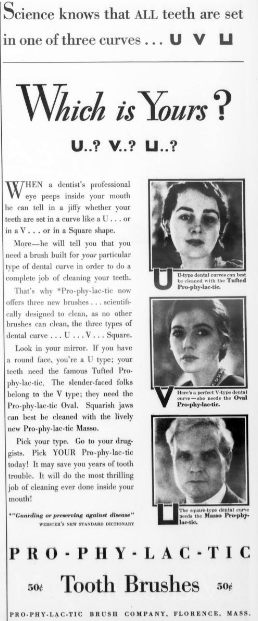
A unique trend from 1929 was the personalization of toothbrushes based on the shape of an individual’s jaw. Today, that aspect is largely overlooked; instead, the focus is on which brush has the softest bristles and can reach the most difficult areas in the mouth.
There were also concerns about how bottle-feeding could impact the development of a baby’s teeth. Bottles with soft nipples were believed to lead to weak gums and crooked teeth, unlike breastfeeding, which was said to strengthen the gums and promote proper dental development. Similarly, today there are trends that advise parents to give their babies firm foods, like vegetables, to help develop strong jaws and healthy teeth.
Feminine Health
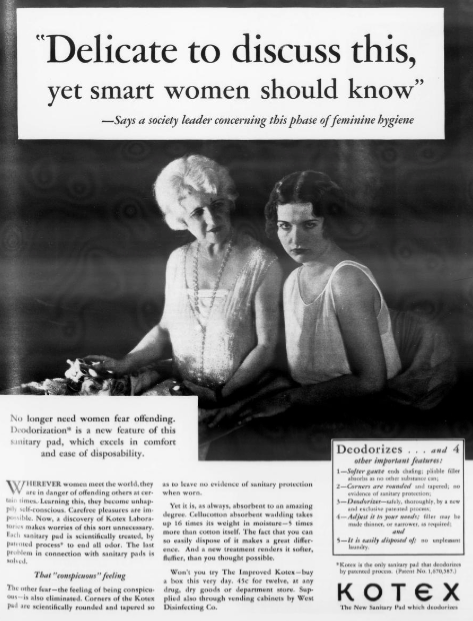
Regarding feminine health, one noticeable trend was the heavy promotion of deodorants, often using fear-based messaging. Ads suggested that if women didn’t use deodorant, men would avoid them, pushing the idea that deodorant was absolutely necessary to avoid embarrassment or social rejection.
Today, deodorant advertisements still exist, but they tend to be more relaxed and focus on confidence or freshness, rather than implying that others will run away if you don’t use one.

Advertisements for menstrual pads often highlighted deodorized features meant to suppress any potential odors during menstruation. Interestingly, there were two different types of pads marketed—one specifically designed for mothers, and the other targeted toward younger women. Unlike today, where trends don’t typically distinguish between mothers and young women, the common focus in modern ads is on comfort and leak protection for active lifestyles. Similar to those older ads, today’s products often feature images of energetic women running, exercising, or confidently going about their day.
As always, skin and facial care were major focuses. Many different brands offered treatments, soaps, and shampoos, often leaving women confused about which ones to use. A lot of propaganda also emphasized having soft, light, flawless hands—an unrealistic standard considering the hard work mothers did daily. Despite this, a narrow definition of beauty was pushed, based mostly on appearance.
Similarly, today’s trends often promote beauty through flawless skin, reinforcing the idea that beauty is tied to appearance. However, one positive shift is that some modern social media trends push back against these ideals, encouraging more realistic and inclusive views of beauty and self-worth, rather than trying to mold every woman into a model-like image.
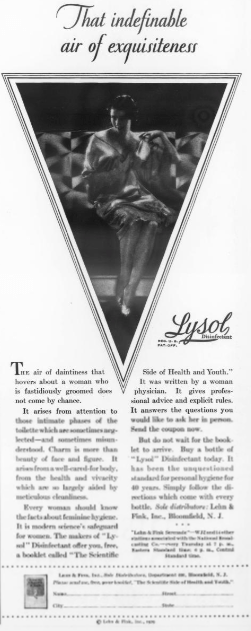
One particularly shocking trend I came across was the promotion of Lysol as a feminine hygiene product. It was advertised as a cleaning solution for women’s most delicate areas, which is disturbing and painful even to imagine. What’s even more concerning is that these ads claimed scientific backing, presenting Lysol’s use as medically sound. The normalization of such harmful practices under the guise of science is deeply troubling.
Conclusion
The similarities and differences between 1929 health trends and today’s help us understand how medicine, health, and wellness have evolved over the years—especially during the difficult post-war period—highlighting the advancement of science, public health awareness, and the efforts people made to care for themselves, particularly women and housewives, who carried the heavy responsibility of maintaining the home and the well-being of their children, husbands, and themselves.
